Are More Women Named for Hosting and Leading House Churches?


One of the greatest misconceptions taught in many churches today is that women were not permitted to teach men, lead congregations, or speak with authority in the gathered church. Yet when we examine the New Testament, not just selected verses out of context, we find something surprising. Women are repeatedly named among those who hosted the earliest house churches—the very places where believers gathered for worship, prayer, teaching, discipleship, fellowship, and the breaking of bread.
The earliest churches did not meet in church buildings. They met in homes. But hosting a house church meant far more than simply opening your front door and offering a place to gather.
In the first-century Roman world, opening one's home to an entire Christian congregation generally reflected far more than hospitality. Homeowners were often patrons of the church who provided financial support, exercised significant influence within the Christian community, welcomed traveling ministers, facilitated teaching and discipleship, exercised hospitality, cared for the congregation, and helped oversee the life and growth of the church. Since dedicated Christian buildings did not exist for nearly three centuries, these homes became the centers from which the gospel spread throughout the Roman Empire.
Women Named as House Church Hosts
Lydia — Acts 16:14–15, 40
After Lydia's conversion, Paul and his companions stayed in her home. Following Paul's release from prison, the believers gathered again at Lydia's house. Her home became the meeting place of the church in Philippi—one of the first Christian congregations in Europe. As a successful businesswoman and patron, Lydia used her resources, leadership, and hospitality to help establish the church from its very beginning.
Nympha — Colossians 4:15
Paul writes, "Give my greetings...to Nympha and the church in her house." Her home was recognized as the meeting place of a local congregation, demonstrating her important role within the early church.
Mary, Mother of John Mark — Acts 12:12
After Peter was miraculously released from prison, he went directly to Mary's house, where "many were gathered together praying." While Scripture does not explicitly call her home a house church, it clearly functioned as a regular gathering place for believers.
Other Influential Women in the Early Church
Chloe — 1 Corinthians 1:11
Paul refers to "Chloe's people" (or "those of Chloe's household"), indicating that her household was well known within the Corinthian church. While Scripture does not specifically identify her as a house church host, many scholars recognize her as an influential Christian leader whose household played an important role in the life of the church.
Phoebe — Romans 16:1–2
Although Phoebe is not identified as a house church host, Paul calls her a deacon (diakonos) of the church at Cenchreae and a patron (prostatis) of many people, including himself. She was entrusted with delivering Paul's letter to the Romans and was clearly a respected minister and benefactor in the early church.
Men Named as House Church Hosts
Gaius — Romans 16:23
Paul describes Gaius as "host to me and to the whole church," showing that his home served as a meeting place for the local Christian community.
Wife and Husband Ministry Teams
The New Testament also highlights husbands and wives serving together in ministry.
Apphia — Philemon 1:1–2
Paul addresses his letter not only to Philemon but also to Apphia and Archippus before greeting "the church in your house." Many scholars believe Apphia, likely Philemon's wife, shared in the ministry and leadership of the household church, suggesting that this congregation was led by a ministry team rather than by one individual alone.
Priscilla and Aquila
Priscilla and Aquila hosted a church in their home, traveled alongside Paul, discipled believers, and together instructed the eloquent teacher Apollos more accurately in the way of God (Acts 18:24–26; Romans 16:3–5; 1 Corinthians 16:19).
Significantly, Priscilla's name appears before Aquila's in four of the six New Testament references to the couple. In the first-century Greco-Roman world, husbands were normally mentioned first. Many biblical scholars believe this suggests Priscilla held a particularly prominent ministry role or was the more widely recognized teacher and leader, although Scripture does not explicitly tell us why the order varies. Whatever the reason, the New Testament consistently presents them as ministry partners serving Christ together rather than as one leading and the other merely following.
What Does This Tell Us?
While the New Testament names only a handful of house church hosts, it is striking how frequently women appear among them. This is remarkable considering the strongly patriarchal culture of the first century.
If God intended women to be excluded from meaningful leadership, it is remarkable that the Holy Spirit repeatedly preserved the names of women alongside the very congregations that met in their homes. Scripture portrays these women not as silent spectators but as patrons, co-laborers, disciples, teachers, benefactors, deacons, and faithful servants who helped establish and strengthen the early church.
The growth of Christianity was never the work of men alone. God commissions all believers to make disciples of the nations and builds His Kingdom through the gifts of His entire Body. Throughout the New Testament, faithful men and women served, taught, led, discipled, and labored together for the gospel, each using the gifts God had given them.
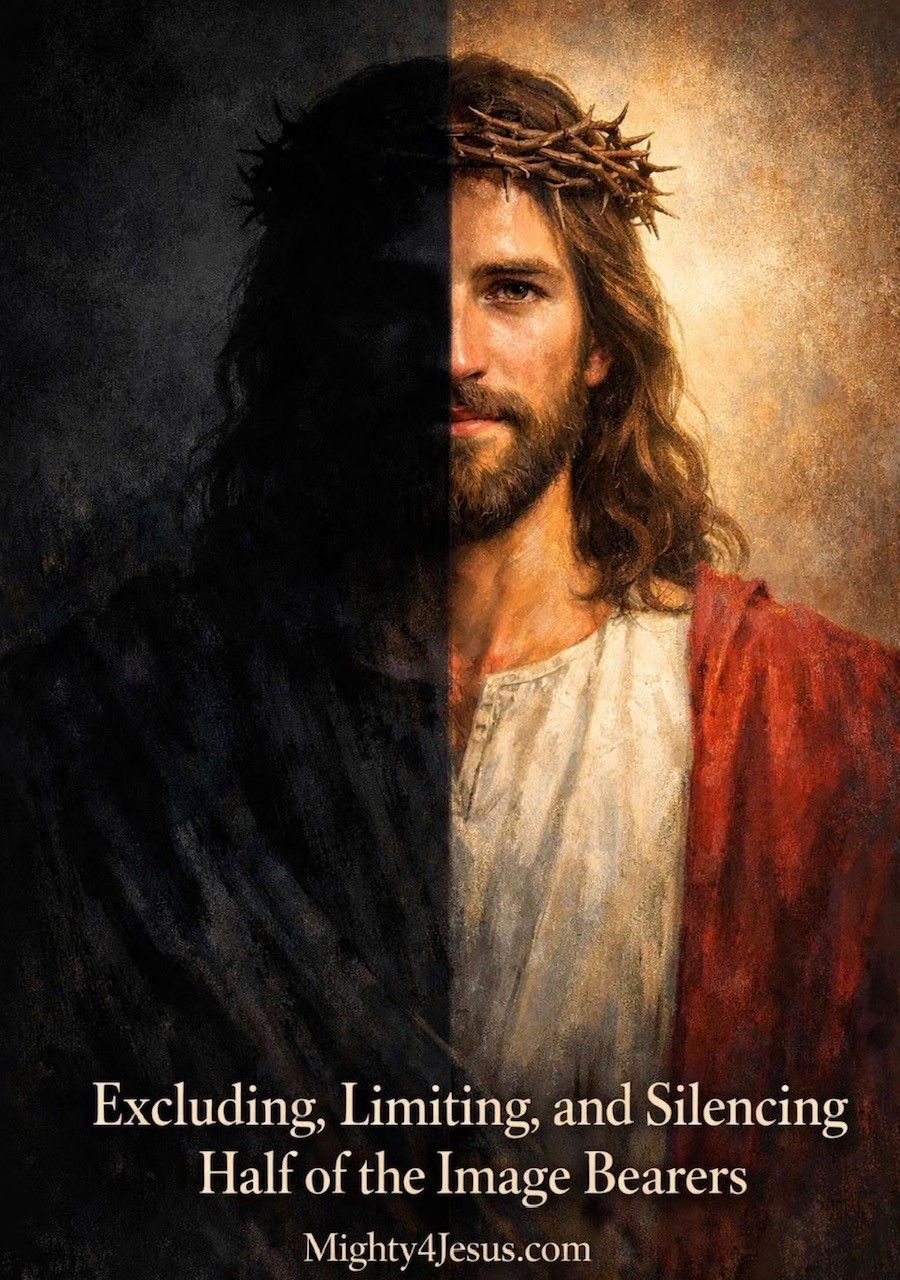
When women's ministries and leadership are repeatedly dismissed, minimized, or restricted simply because they are women, the result is the elevation of men into positions of power and the diminishing of God's daughters and their God-given callings. Yet the New Testament presents a very different picture—one of mutual partnership, shared ministry, and one Body under one Head, Jesus Christ.
The earliest churches were built by ordinary believers opening their homes, sharing their resources, teaching the faith, making disciples, and serving together. Men and women alike answered God's call. That is the Kingdom pattern revealed throughout the New Testament—a Kingdom where every member of Christ's Body is invited to use the gifts He has given them for His glory and the advancement of the gospel.
Please share so others may know the truth that sets free.
Be free to be mighty for Jesus.
In freedom and might,
Jeannette


Comments