What God Hates


Scripture is not vague:
“There are six things the LORD hates, seven that are detestable to him.”—Proverbs 6:16–19
God hates proud eyes, lying tongues, hands that shed innocent blood, hearts that devise wicked schemes, feet that rush toward evil, false witnesses, and those who stir up conflict.
Notice what leads the list:
Pride.
Not divorce.
Not singleness.
Not women's voices.
Not women leading.
Pride.
Pride, Arrogance, and Control
Pride is not righteousness.
Arrogance is not confidence.
Control is not spiritual authority.
And leadership is not about who gets to be in charge.
“God opposes the proud but shows favor to the humble.”—James 4:6
Yet pride and control can disguise themselves in religious language:
“biblical authority,”
“headship,” “
God-ordained hierarchy,” or “male-only leadership.”
Jesus taught His followers something very different:
“The rulers of the Gentiles lord it over them… Not so with you.”—Matthew 20:25–26
Not so with you.
When leadership becomes about superiority, domination, silencing, limiting, gender segregation, or maintaining control over another person, it no longer resembles Jesus.
When Scripture Becomes a Weapon
Some of Jesus' strongest rebukes were directed toward religious leaders who used religious rules to burden others:
“They tie up heavy, cumbersome loads and put them on other people's shoulders…”—Matthew 23:4
Legalism occurs when human rules, traditions, interpretations, inferences, and eisegesis are elevated until they are treated as though God Himself commanded them.
Scripture can then become a weapon used to shame, silence, restrict, exclude, and control—especially when interpretations benefiting those in power are presented as unquestionable commands from God.
Jesus told the religious leaders:
“You study the Scriptures diligently… These are the very Scriptures that testify about me, yet you refuse to come to me to have life.”—John 5:39–40
Scripture points us to Jesus.
The religous leaders clearly did not have a relationship with God nor were they abiding in HIm. Their fruit was not life giving. If the interpretations consistently produces pride, control, prejudice, oppression, and contempt instead of the character of Christ, perhaps it is the interpretations that needs to be examined.
Does God Hate Divorce—or Violence and Treachery?
Malachi 2:16 has frequently been reduced to:
“God hates divorce.”
Yet the Hebrew is difficult and English translations differ. Several modern translations understand the passage as condemning the husband who hates and divorces his wife, while the surrounding verses repeatedly condemn treachery, covenant unfaithfulness, and violence.
Psalm 11:5 says:
“The LORD examines the righteous, but the wicked, those who love violence, he hates with a passion.”
God is not indifferent to what happens to His daughters behind the closed doors of a marriage.
A marriage covenant should never become a theological shield for violence, coercion, oppression, contempt, perversion, or any form of abuse.
Jesus came to set the oppressed free—not trap them in spiritualized abuse.
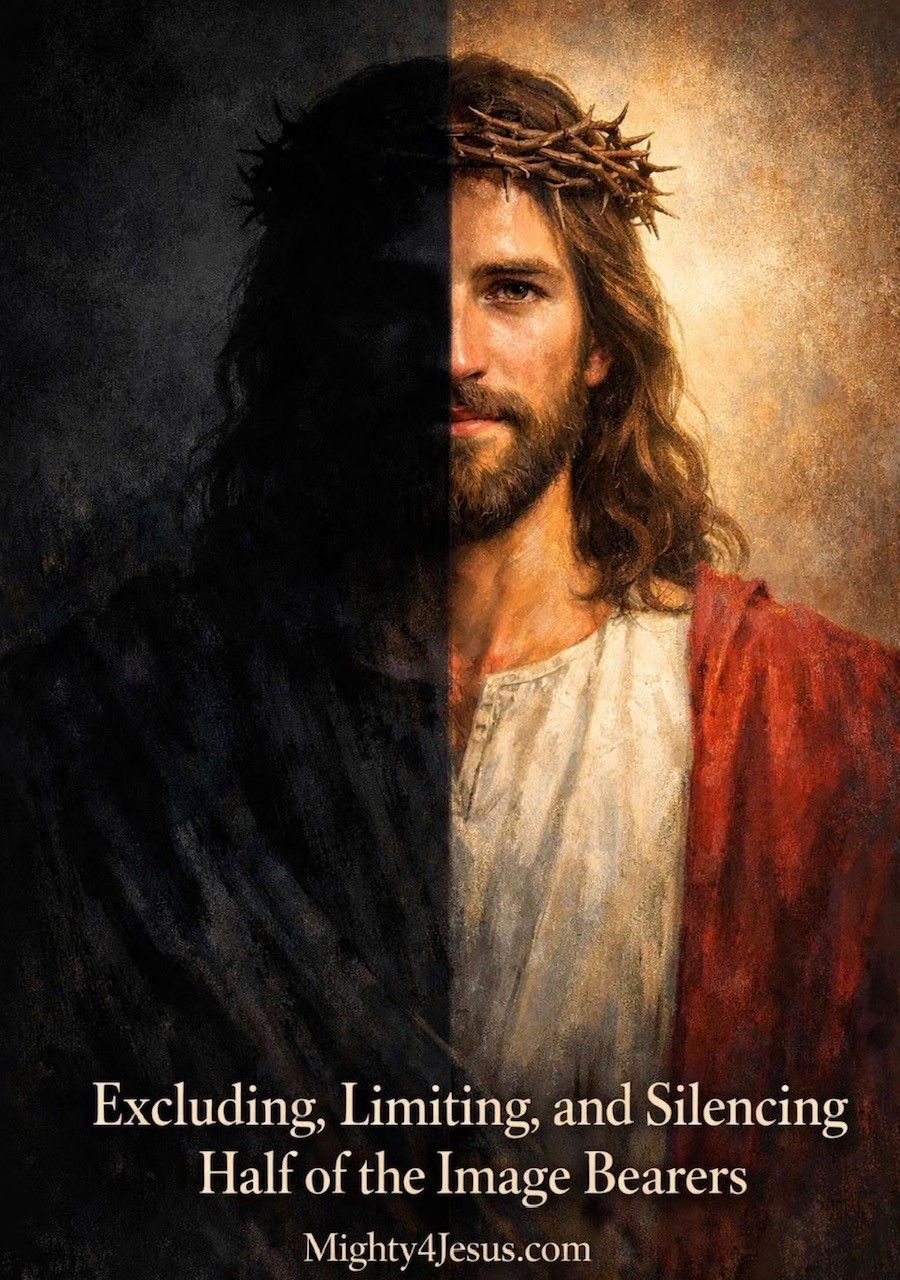
God Hates the Degrading of His Image-Bearers
Every human being bears God's image.
Scripture says:
“Anyone who hates a brother or sister is a murderer.”—1 John 3:15
Hatred is not limited to physical violence. Contempt can manifest through discrimination, humiliation, dehumanization, exclusion, silencing, controlling, gender segregation – roles- rank, or continually treating someone as an inferior human being.
What an affront to God to claim that He intentionally created some of His image-bearers to be inferior to others. Such a claim diminishes His creation and reflects upon the Creator Himself. To declare women inherently inferior human beings is also to declare part of Christ’s own Body inferior. Scripture teaches no such thing.
Scripture also gives a serious warning about revilers—those characterized by abusive, insulting, degrading, or slanderous speech. The contempt of women is not God’s design. Paul includes revilers among those whose persistent conduct is incompatible with inheriting God's Kingdom (1 Corinthians 6:9–10).
So when God's daughters are continually characterized as:
“Too emotional.”
“Easily deceived.”
“Unfit to lead.”
“Created to follow men.”
“Required to submit without a voice.”
We need to ask:
Does a loving God actually say these things—or have people inferred them and then attached God's name to their conclusions?
God created both male and female in His image to govern the earth together (Genesis 1:27).
To demean His daughters does not honor our Creator.
God Does Not Command Discrimination
God shows no favoritism (Acts 10:34), and James warns believers against showing favoritism (James 2:1–9).
Yet discrimination can become so wrapped in religious wording that people stop recognizing it.
“You cannot lead because you are a woman.”
“You cannot preach because you are a woman.”
“You cannot have the final say because you are a woman.”
“You must always be under a man's authority because you are a woman.”
We should ask a simple question:
Where exactly did God say that?
Physical differences between male and female do not establish a spiritual hierarchy in Christ. The Holy Spirit distributes His gifts according to His will (1 Corinthians 12:4–11)—not according to gender.
When many speak of “gender roles,” what they are actually teaching are gender ranks—one gender is given authority, leadership, and the final say while the other is placed beneath, placing them as their property and housemaid. Yet Scripture never establishes a universal system in which men, simply because they are male, are spiritually ranked above women or given authority over them.
These supposed “gender roles” are often built from inferences and eisegesis rather than explicit commands of Scripture. When those interpretations consistently place men in positions of power while restricting women, we should examine the pride behind the desire to determine who gets to be in charge.
Jesus Is the Head
Scripture says:
“He is the head of the body, the church.”—Colossians 1:18
Jesus is the Head, the source of all things including authority.
Men and women together comprise the Body of Christ, and every member is connected to the same Head—Jesus.
“He is the head of the body, the church; he is the beginning, the firstborn from the dead, so that he might come to have first place in everything.”—Colossians 1:18
Everything includes marriage. Marriage does not exist outside of Christ or create a separate hierarchy within His Body. Every believing husband and wife remains in Christ, connected to the same Head. Jesus has first place in all things; therefore, Jesus is the Leader and Authority in marriage—not the husband replacing Him in that position. Trying to take God’s place is a definition of blasphemy, it is the pride that kicked Lucifer out of Heaven. He wanted to elevate himself above others and be like the Most High (Is. 14:14).
Different members have different gifts, strengths, wisdom, and anointings, but difference does not require hierarchy when Christ has first place in everything Authority flows from Christ through His whole Body—not merely half of it. There is one Body, one Head, and one Lord—Jesus Christ.
And there is one person Scripture repeatedly tells us to control:
Ourselves
Self-control is a fruit of the Spirit (Galatians 5:22–23).
We are called to control ourselves—never another.
Authority Is Not Permission to Control
Jesus gives His followers authority over the power of the enemy (Luke 10:19).
But nowhere does Jesus give one gender blanket spiritual authority to control the other.
Both women and men are called to make disciples, advance God's Kingdom, minister, use their spiritual gifts, tear down spiritual strongholds, proclaim the gospel, and participate in setting captives free.
Men do not uniquely represent Christ while women uniquely represent the Church.
Both men and women are image-bearers of God. Both belong to Christ. Both are members of His Body, which means everything Jesus did and desires to accomplish through His Body, He can do through both His sons and His daughters. Jesus said that those who believe in Him would do the works He did—and even greater works (John 14:12).
Are We Actually Following Jesus?
The word Christian identifies us as followers of Christ.
Yet much of the Church's attention has been consumed with questions Jesus never told us to center:
Which gender gets to lead?
Who gets the final say?
Who has authority over whom?
Who gets to be in charge?
Meanwhile, Jesus taught humility, washed feet, welcomed those religious culture pushed aside, confronted hypocrisy, rejected “lording it over” others, empowered people, and set captives free.
Perhaps we have been asking the wrong question.
The question for a follower of Jesus should not be:
“How much authority can I have over someone else?”
But:
“How much does my life look like Jesus?”
The Kingdom of God is not advanced through pride, superiority, prejudice, domination, or control. It is revealed through righteousness, humility, truth, justice, freedom, service, and love. The call to treat others as more important than yourself is not just for women it’s for those who are in Christ.
The Church is called to set captives free—not create new religious chains.
Jesus did not call His followers to replace Him.
He called us to represent Him.
Because we represent Him, we should also bear His character.
See my blogs: 10 Reasons Why Kephale- Head Cannot Mean Leader
And
Only Wives Submit? (The real meaning of Hupotasso in 1st Century Greek)
Be free to be mighty for Jesus,
In freedom and might,
Jeannette
Facebook: Let My Women Go


Comments